Showing posts with label students. Show all posts

Tuesday, May 5, 2009

Spider Killer - Bolivian Super Hero


Sunday

Lyle and crew got up early today to do more work on the seeder. After another great breakfast, we all went to church--the first service ever for one of our team. It was good to see Jhonny’s family again, including the newest member, Moises, who was born about a month after Jhonny died. We sang many songs and listened to a Spanish sermon.  After the service, the community fed us a great meal.

When we returned to Hoogland’s, we finished the seeder and flipped it right-side-up while others packed and cleaned. We took one last trip to the river, and Lyle got to fulfill a fantasy of his: to quad in the jungle. (Funny how our fanta1sies change as we age. Or maybe we just become more realistic with our expectations!)

A vehicle never goes to town empty, and our bus was no exception.  We picked up many locals with their kids and produce, including Jhonny’s mom. Crystal had brought a number of copies of the Messenger magazine that contained the article she wrote about Jhonny. Erselia, Jhonny’s mom, wanted Marg to translate the  article for her. It must be very odd to read about your dead son in a magazine from a country half a world away. I am not sure how I would take that if it was my child. Do you feel honoured that someone so far away remembers your child, too, or do you just feel sad all over again?

Brent gained a reputation as a spider killer will he was still working on the seeder. He could kill just about any spider with his trusty wrench if he swung at it enough times. He earned the name Spider Killer - Bolivian Superhero! He also gained the reputation for sleeping very soundly anywhere, anytime. So, this afternoon when he fell asleep on the bus with his shirt open, someone who shall remain nameless used a Sharpie to draw a big S on his chest with a stylized spider. This took many minutes to complete with gales of laughter rolling through the vehicle the entire time. Our Bolivian guests howled along with us. Erselia laughed so hard she said her jaw hurt. Eventually Brent awoke, but it still took a few minutes for him to catch on to what everyone was laughing about. He may never have noticed his insignia if he had not had to wipe the drool off his chest. So now he is simply known as Spider Killer - Bolivian Superhero.

Bye for now

Friday, April 24, 2009

The Final Shave

The final page has been turned on the Shave to Save saga. A good time was had by all (with the possible exception of Brent). Jack, just trying to be helpful, I'm sure, brought the hedge trimming shears, but Bob the Barber couldn’t hold them high enough long enough to get the job done, so the sheep shears had to come out.

As it turns out, Bob's barbering skills are dubious at best. He took the first few swipes at each head, but Wilma needed to finish the job. In the spirit of giving,Wilma even offered to let Bob take a few swipes at her, in the end offering up half her hair--the bottom half!--to the cause.

When the tally was done there was $1,025.34 on my head. Not too shabby, I thought. The amount that is; my head was plenty shabby! I was a little concerned when Lyle pulled out a brown envelope, but, although it made the competition closer, it was not enough to claim all my hair! I managed to get $1,378.00 on Brent’s head, so he lost it all, so to speak! That makes a total of $2,403.34 going to Bolivia for various projects! Thank you, Thank you, Thank you!
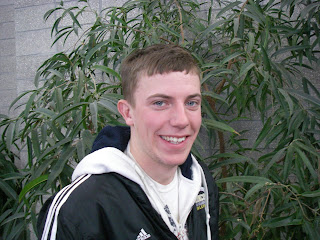
What I am most pleased with is Brent offering to do this for no monetary reward to him. He was not raising funds to subsidize his trip or to pay for new travel equipment. ALL the money goes somewhere else. $2,400.00 CAD C will go a very long way in Bolivia. So, thanks to all of you who gave, but especially thanks to Brent who gave of himself.

Thursday, April 9, 2009

Shave to Save Update

Well the battle is on! At the end of the first week, I am ahead by a hair (which means I won't end up with any!), so I decided to use this space to strongly urge you to pledge money for BRENT's haircut. Let me cut to the chase: if I can't raise some funds for Brent, I am going to have to pack an extra suitcase just for sunscreen!
I have received a number of email inquires about the beard; no, it is not coming off! Rumour has it that a consortium is being formed to double whatever funds are raised by 'shave day' if I will take the beard off, too. To quote Ray R., "Talk is cheap. It takes money to buy whiskey." I suspect Gord A. and Trish are behind this anti-beard conspiracy. As for me, I am still looking for a corporate sponor to donate to Brent's haircut. I think that may be the only way I will get to keep any hair.

It has been a hair-raising week. I never thought that people's need to get even with me would result in saving lives in Bolivia, but, hey, whatever works! In all seriousness, though, my thanks go to all who have cut into their own funds to help those in need. Brent has been doing a wonderful job of drumming up support to cut me down to size. There are now a number of posters up on campus that I suspect have seen the less-flattering side of a PhotoShop program. The Student Association has also gotten behind this and is advertising on our behalf. Funds are being donated online, and I recieve a number of emails every day.

To better serve the students and to drum up a little more support on Shave day, the event will be held in the Time Square in residence on April 24th at noon--the last day of classes. Please plan on coming out to see the hair come off! If you are wondering what I am talking about or can't remember how to become involved, please see the origonal release below. Thanks for you support, and keep it coming!

In an effort to raise funds for A Better World’s Rural Health Project (an initiative that covers medical costs for individuals and families who cannot afford medical care) and for Bolivian agriculture projects, a few members of the team are donating their bodies (well, just their hair) to science (okay, it’s cosmetology, but that is science, right?) Gordon Gilchrist, who is also ABW’s technical director, and Brent Nicol, student extraordinaire, have agreed to participate in this hair-raising scheme. They will have their hair cut—shorter and shorter as the funds raised pile higher and higher. So choose your favourite and give, give, give!!

Whoever “wins” 1st place (raises the most money) gets their head shaved clean!
Whoever comes in 2nd gets to keep a 1/2” of hair.

To donate:

(Charitable receipts available for donations of $25 or more. Include mailing address, please.)

If you want an idea of the kind of work these donations will support, read:

It is Not All Laughing Children and Happy Endings
How Does Your Garden Grow?
You Can’t Get There From Here
Bolivia or Bust Tour 2009!
Bolivia or Bust
How I Spent My Summer Holidays

Friday, February 6, 2009

How Does Your Garden Grow?


A new member has been added to this May’s Bolivia trip. Wilma is going to join us and will bring her fruit tree and production garden experience with her. The goal for our group is to develop a three-year plan for food production for CERENID, a home for street boys, near Samaipata so her skills will valuable indeed. Also in the group we have Brent, an Olds College GIS student who will be in charge of mapping; Stacey, an Olds College Agricultural Production student, in charge of infrastructure; vets; a medical professional; a livestock specialist; an agricultural mechanic; and a writer extraordinaire! What a great team! Oh yes, and then there is me—the Jack of all trades.

Currently, the students are busily preparing their presentations with background information of Bolivia. We will have two presentations at noon on Friday March 13th.I am curious to see how their impressions of the country change as they go from impartial researching to actually travelling in and experiencing the country, because I’m very sure they will. For me, one of the best parts about traveling is that what I expect and what I end up experiencing is rarely the same thing. I suppose this also a good thing for the travel industry; if you could get the whole experience by merely researching a country, there would be far less incentive to spend all those wasted hours in airports!

The daily planner I use for these trips is a spreadsheet. That is because the plan changes often, and the idea of typing up a new one every time a change is made terrifies me! As I suspected would be the case, I am on version six of the schedule already—what with trying to coordinate in-country hosts and finally getting flights confirmed and such. I love spread sheets! I am moving, rearranging, and calculating like mad. It is the closest I get to being organized. (Thanks, Murray).

We have a great team assembled! Couple this with some great in-country contacts (you have to have great people on the ground) and I think we are looking at an unforgettable learning experience for everyone. It’s Bolivia or bust, baby. Just try to stop us now!

Wednesday, January 14, 2009

You Can’t Get There From Here

Well, I have put off buying airline tickets for the Bolivia trip for as long as I could. I guess you just can’t outwait global uncertainty and political unrest. At some point you just have to dive in. I feel for the travel agent because booking tickets is a bit like navigating a corn maze; there are many possible ways to reach the destination, but only one “best” way.
There is never a direct flight from where I am to where I want to be! It is not so much the flying I dislike but the waiting in airports between flights. It will be a real treat to travel with a group this time--much of my traveling is on my own—partly because I have a fear of falling asleep in an airport and missing my flight, or of getting on the wrong plane and winding up “going to Winnipeg.” The chance of these things happening when you are with a group is greatly reduced, and if these things do happen, at least you have company to commiserate with.

The standard route to Bolivia from Calgary is on American Airlines. You spend 22 hours hop scotching across American cities to end up in Miami, then La Paz, before finally ending up in Santa Cruz. Now, I will do almost anything to avoid the Miami airport due to some bad experiences with rats, faulty plug-ins, too-short or too-long turn around times, invariable the wrong gate listed, and significant running. I sometimes question if going to Bolivia is worth suffering through the Miami experience—but here I am about to go again, so I guess I have my answer.
I presented the trip’s daily itinerary to the group last week. It looked a bit skeletal. I am amazed at how much meat has been added to the bones in the week since then! I met with Jake and Marg Hoogland this week, and the event calendar filled rapidly—as I knew it would. Marg and Jake have been living and working in one of the homesteading areas in Bolivia for 3ish years now, and it will be a real eye-opener for our group to experience those surroundings for a couple of nights. I am sure it will be a highlight of the trip for many. I am also convinced that Jake will have no trouble filling all the time we can devote to the area.
Next week I hope to talk to Maria Jose from CERENID to flesh out the rest of the schedule. I have never worried about a trip plan that was too thin, I only hope it doesn’t get so fat that it needs two seats on the plane! One thing for sure, Olds College/A Better World Bolivia Ag Tour 2009 will not be boring!

Friday, January 2, 2009

Washing Over My Soul

This is the time of year for joy and peace, but, for me, it is also a time of reflection. The world is full of moments of tragedy and triumph, both natural and man-made in origin. Each of these events resonates with us differently, and, I believe, each event shapes us to some degree. I cannot explain why the tsunami of December 26, 2004 impacted me so much at the time, and I could not imagine how it would change my life--land locked as I was in central Alberta--but it did! Because of the tsunami, I met Eric Rajah and A Better World, I realized that I needed to involve the very talented people I know in humanitarian endeavours, and, most importantly, I recognized the importance of creating opportunities for our students to see the real world! It was as though that wave had washed over my soul.

Lessons Learned


Ours was the second team from ADRA (the Adventist Development and Relief Agency) to reach Sri Lanka; a medical team had been in the area before us. Pictures can never fully capture the experience of being on-site, so, in spite of my reviewing many photos prior to the trip, I was not ready for what I saw upon arrival in Pottuvil. When we reached the coast, the extent of the devastation was readily apparent, and there had already been two months of cleanup. I ran on pure adrenaline for the first three days. My mood ran from complete despair through admiration to optimism. I learned a few valuable lessons on that trip:


  • Nothing good can happen if you do not have good local people on the ground.

  • Not everyone is good.

  • Follow the money.

  • Leave your preconceived solutions at the airport.

  • Listen.

  • Make a difference one person at a time.

  • The road to hell is paved with good intentions!

There is no question that I saw many examples of greed, corruption and profiteering, but I also saw many examples of giving, caring and personal sacrifice. The trick to helping is to always work with people exhibiting characteristics of the latter group.

One From the Latter Group


On one occasion, two of us were busily building doors to stop the monkeys from stealing the offerings at local shrine when a man brought us a melon. He spoke almost no English, and we couldn’t even identify the language that he was speaking, but I’m sure he was basically saying, “Take a break you crazy white guys. Don’t you know it is the hottest part of the day? We don’t need two dehydrated old men passing out on us; we have enough to deal with right now!” Sagara helped us for the rest of the day.

At the end of the day we learned that Sagara had aquired a simple machine and was attempting to make cinder blocks, one at a time, to support his family and to help rebuild his community. Sagara was a laborer who had lost everything but his family—a family that grew by one on the day of the tsunami as his wife gave birth amidst the chaos. Now, they were all living in a tent in his mother-in-law’s yard. My mind started whirring, plotting, and planning. After doing a quick needs-assessment, asking many questions of many local people, and, most importantly, listening carefully to their answers, our group discussed the idea of supporting Sagara so he could increase cinder block production.

Sagara had asked for nothing. He had given freely of himself. He was not aware of our plan when he arrived for a meeting at his neighbours house. We simply started asking questions of Sagara with the help of a translator, and, after four hours of talking, had a plan that would see him triple his production, employing 12 local labourers. As a bonus, Sagara would be now be producing “Super Blocks” because I passed on what I had learned from Sandy R. in Mech 269 when I was a student at Old College. (It still amazes me how misunderstood concrete is, but that is the topic for a duller blog.)

I went back to Sri Lanka some months later to see if what we had started had gone anywhere and to start more projects if the people we chose during our first trip proved to be the right people with whom to work. The change in the area was amazing. The results of international aid were evident everywhere--some positive and some negative. Buildings were going up all over, damage had been cleaned up, and many people were far better off than before the tsunami. Unfortunately, not everyone was so lucky.

Of Locals and Labour
The best example of aid damaging the local economy involved the rice farmers. Most of the rice crop had been harvested before the disaster struck, but huge amounts of rice flooded into the country from abroad. The media carried footage of people without enough to eat so well-intentioned but misguided foreign agencies did what seemed right—they sent food. But the effect of that food hitting the market was that the price of rice was cut in half while the price of labour doubled. Aid agencies paid more double the going rate for labor, so those who would normally work for a local rice farmer were intisted into taking jabs in construction, and the rice crop for the following year was reduced drastically. Some local farmers lost their farms. In time, the markets sorted themselves out, but in the short run many suffered not from the wave but from the good intentions of other countries. The moral of the story is: if something is needed, buy it locally if you can!

Did we back the right horses? Mostly, yes. We had wells drilled that were producing clean water for residents of newly constructed communities—a very important project and a huge success! Some of the political relationships we had to cultivate produced less bang for the buck, so we minimized our exposure on those fronts. But overall our involvement was a success.

Changing Lives

For me, the greatest success was Sagara. When I returned, he was producing blocks—and lots of them! He was filling orders of 80,000 blocks, 3 blocks at a time. Still, the success was not in those numbers but in Sagara himself. Upon my return, Sagara was still living in a tent and a grass shack. When I asked him why, as a mason and block maker, he had not built himself a house like all his neighbours had, he replied, “I will build my house, but right now my country needs me to make blocks.” He was providing employment for his countrymen, producing a much-needed local product with local technology, and supporting his community by donating bricks for school projects. His loan repayment funded six small agricultural projects which helped some very poor families to get back on their feet.

When I left, Sagara said to me, “Before the tsunami, I had a black heart, but, because of all the help after, I am now a good person. I don’t have a black heart any more.”


For Sagara and I, this wave washed away the silt that clouded our souls, letting both of us see more clearly what is truly important.

Friday, November 28, 2008

Chapter 12 - All Things Green

Last week, I attended the Green Industry Show and Conference in Edmonton. You might ask yourself, “What is a CAD/survey/GPS instructor was doing at a Hort conference?” particularly after a colleague of mine made a bold statement recently that “’jerk of all trades, master of none’ is NOT a compliment!” (but that is the topic of a whole other blog soon to come!)

Well, to answer your question, I was there to start yet another chapter in my forever-changing life. This conference was for industry owners and managers, not the general public, so it was a nice mix of techy stuff and marketing stuff and personal growth/management stuff.


I was amazed at what the industry, with a very small budget, is doing with research projects. Being from Saskatchewan, I place a high priority on trees, (I always thought the Caragana was a big tree) so I hope that Olds college will join up as a partner on the new prairie tree trials that started this year. (hint, hint)

I was interested in the talk on the marketing challenges facing market garden centers. They have lost a huge slice of the market to the big box stores (interesting, then, that a large part of the whole conference was sponsored by Rona). I was pleased that the speaker did not digress into a pity spiral but chose to focus on the niche his store can fill. He provided an excellent focus on what true service is, and I agreed with his comment that people will pay more if you truly provide them with great service.


For me, the most interesting—or perhaps scary—sessions were on personal management and personal health. These sessions were applicable to anyone but were a big part of this conference because many of the attendees were small business owners. The session on health just reconfirmed that I am fat, I eat badly, I exercise too little and have increased my chances of dying from all the major killers of my age bracket except PMS (you had to be there). The truly enlightening session for me, though, centered on stress and measuring its effect on you. You will be happy to know that when I completed the self diagnostic test, it indicated that I am completely stress-free—mostly because you attended my funeral three years ago! Perhaps I misunderstood a question or two?


At any rate, I learned a lot, and I spent some time in the Olds College booth, meeting people and answering questions. I spent some time with my new colleagues, getting to know them better. And I got a shrub out of the deal; what more could a guy ask for?


P.S. I also fulfilled a lifelong dream to fly an airplane in a hotel room. I am aware that this is not the dream most men want fulfilled in a hotel room, but I am different—and I am OK with that!!

Friday, November 21, 2008

Cookies

I would never think to buy a cookie. In fact, if you asked me, I would say I don't particularly like cookies, but when offered one, I can't ever remember saying, "no.” I have come to the conclusion that it is not the cookie itself I like, but the fact that someone gave me the cookie. That is what makes me feel good. Why? I have fond memories connected to cookies. My mother and I would often make cookies—just she and I—though I was never good at spooning them out onto the baking sheets. Sometimes she make them herself and have them just coming out of the oven at the time I got home from school, so perhaps I have a connection with cookies and freedom?
A couple of cookie incidences have occurred this month that started me thinking about this. Two days after a particularly stressful meeting, I was alerted to the presence of a package in my mail box. Because I was not expecting anything important, I neglected to check my box on my way out that evening. Early the next morning, however, after a particularly bad nights’ sleep, I discovered the wonderful package in my mailbox—four homemade cookies! No note, no name attached—just these great cookies. It was the perfect way to start my day, and my students truly appreciated it, too, because my jokes were better (or at least more frequent), my demos were far more lively. Perhaps it was all explainable scientifically with blood sugar spikes and chocolate euphoria, but I prefer to think that the good mood was caused by the conjuring up of warm memories of better times. True to my conclusion, it was not the cookies I appreciated most—delicious though they were—but the kind, friendly gesture. It was not the first time that cookies had appeared, and I was finally able to confirm my suspicions of their origins; I wholeheartedly thank the baker.

It has occurred to me that I may not be alone in this reaction to cookies, but times are changing and may be leading to some variations on the theme. Making cookies is not a time consuming process, but the baking of cookies is. A mother I know still takes the time to make cookies with her children—something for which she should be commended, in my opinion—but with her very busy life, more cookies get made than baked. On more than one occasion this month, she has confessed to eating cookie dough! At the time I chalked this up to her having no chips in the house or no time to make popcorn, but, upon reflection, I believe that it might be the new time-pressured adaptation of an old mood-lifting technique. We all need someone in our lives to give us cookies when we need them. Let me challenge you to make cookies for a friend in need—or at least buy the homemade looking cookies from the store and repackage them! Let’s strive to create a world where no one has to eat cookie dough!

(Until next week, keep the cookies coming to keep the ravings positive.)

Friday, November 14, 2008

Learning to Crawl


I spent much of Remembrance Day watching my two grandsons—3 years and 8 months. Most interesting to me was watching my youngest grandson try to crawl. He has rolling down pat. As a matter of fact, he figured out how to roll his way over and out of the barricade set up to contain him in the living room. His mother and I just watched in amazement, and then his mother retrieved him. But crawl? As much as he tried—desperately tried, many times—he just can’t do it…yet.

So, why is he so driven to learn to crawl? Movement is important to get what you need and what you want. (At 8 months old, he is already striving for what he wants—for him this is mostly whatever his brother has—and not only what he needs.) But, it is not just movement he craves—he has that—but rather more efficient movement. He is seeking to improve upon the skills he already has. Why? It seems that the desire to learn is not just driven by our needs; there must be a hard-wired component to it, as well. I am sure there are many Ph.D. dissertations on this topic, but I am almost positive that he has not read any of them. He doesn’t know why he wants to, he just does.

The whys might still be a mystery, but it is fascinating to watch him try to learn so desperately. At 8 months old, his motivation to learn is mostly internal, I suspect; I hope he is not worrying about meeting his grandpa’s expectations just yet. Watching him made me think about the last time I worked that hard at learning something and what so motivated me. And it made me think about my students and how they look at learning.

I have always said that I cannot teach anyone anything, but I can give them good reasons to want to learn. What I mean by that is that, as a teacher, I try to stimulate that hard-wired part of each student that creates the desire to learn. I have seen that same determined drive that I see in my grandson in some students when they try to solve a problem or complete a task. They, too, possess that same desperate need to “do well” or to “be successful.” Problem is, of course, I don’t see it often enough.

Stimulating a student to be motivated is ¾ of my job; the other 1/4 is helping them acquire strategies and techniques. If I can create in them the desire to learn and if I can teach them how to learn to learn, then I know I’ve given them a life skill that goes way past any memorization of facts or information. After all, information today is free or cheap. Wanting to learn and knowing how to do it is far more important.

How I wish I had that single-minded drive to learn new things that I see in young children! Perhaps we would be better off if, instead of always looking ahead, we could look back in our own lives and remember what it was that motivated us so.

Thursday, October 30, 2008

She’s Been Good to Me!

She’s been there for me for more than 18 years, although she left me for a while in the middle. I forgot how much I liked her until she came back to me. Now I don’t know what I would do without her. We fit. We share common strengths: we are both frugal, both minimalists, and both starting to show our age.

I remember the first time we were together; I just knew that even though I was newly married, she was going to be part of my life. My then father-in-law was furious when he found out about her, and I can’t blame him. He just couldn’t understand. He was worried for his daughter, and I don’t blame him for that, but I just couldn’t resist her! Things got tough more than once, and she and I would go off together just the two of us and work things out. Nothing inappropriate—just talk things through, and come back more level headed.

As I said, she left me at one point. I started over and pretended not to care. I found others like her, but it was not the same. I even tried a younger version of her, but that was a disaster! We just never got along, the younger model and me. It is amazing what a difference 10 years can make. Trust me younger is not necessarily better! Fortunately for me, she came back to me, and we have been together ever since.

We reached a milestone together on Monday--one that even my father hasn’t reach in his 80+ years. It was kind of sweet in a way. We were coming to work together early in the morning, and I just had to pull over and take a picture of her. A close-up to show what we have been through together, to capture that special moment for us to remember after the inevitable happens.


To my favorite 1989 Pontiac Firefly, congratulations! I don’t think either of us has another half million Kilometers left in us.


Wednesday, October 22, 2008

Bolivia or Bust Tour 2009!


The first student presentation for the Bolivia or Bust Tour is next Tuesday, and then I will know how much interest there really is. I have been working on a day schedule ever since I came back from my preparatory trip in August, but it is always hard to know how much to pack in. Things happen on trips, and formulating a firm schedule is a fool’s game. For instance, my first day of my August trip was 51 hours long. It was not intended to be, but things happen. When it comes to scheduling, I am not known for stopping to smell the roses, but I know I will have to do much more rose-sniffing on this trip.

Bolivia is the only country that has been able to stop me in my tracks—to make me sit and breathe and take a break. I think I respect her a little for that. In August, I was in Santa Cruz during a para (general strike). Everything just stopped. No cars on the roads. No businesses open. No one working. I think my Facebook status read something like, “Santa Cruz is eerily quiet and peaceful in a Dawn of the Living Dead kind of way.” I found it an interesting form of protest; everyone just has a nice family day. There were a few days warning, so people stocked up on food, water, picnic supplies and toilet paper.

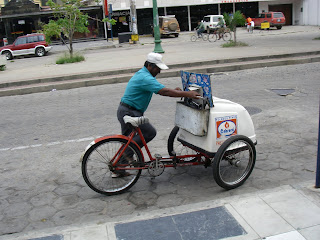
I have a well-honed sense for identifying trouble, but as we walked the streets of Santa Cruz, we saw soccer in the streets, not cars, and we even spotted an occasional ice cream vender. It has been my experience…you know, from riots I have attended in the past!...that there is rarely ice cream served. And yes, this para was very peaceful. Some since then have been more violent, unfortunately, but still nothing on the scale of the violence that has been seen in many other countries around the world.

What is important for me to remember, and it is important for students to understand as well, is that we will be travelling in a developing nation: things are not like home. They aren’t better or worse, just different. There are certainly risks and dangers (mostly with driving) in Bolivia that we do not have to contend with at home, but there is so much to be experienced! I can’t imagine Calgary without cars for a day, and I can’t remember the last time I took a day off work and spent it with my family.
There is no question that this will be a learning experience for all involved. And, for many, it will truly be a once-in-a-lifetime experience. See you on the “B or B Tour 2009”!

Wednesday, October 15, 2008

Turkey Poisoning

We have just completed the first long weekend of the school year. I can always pick out the first-year students who are having problems with homesickness by the Thanksgiving long weekend. It starts about three weeks before Thanksgiving with unexplained absences on Friday or Monday—or both!


During the first month of classes, there are many activities to keep students busy, and, of course, there is a little studying as well. By the second month, the assignments are stacking up, finals are coming, and homesickness is setting in. Judging by the laundry baskets in the back seat of many of the trucks in the parking lot, students are suffering a shortage of clean clothes as well.


There is nothing worse than being away from home for the first time and being sick. The Friday absences are exacerbated by Thursday night activities. In order to fight off homesickness, students often gather at a local watering hole to compare notes on school projects. (At least I think that is what they are doing?) Waking up on Friday morning, feeling sick, missing Mom or Dad, and facing an 8 o’clock CAD class are ingredients the combine nicely to make a long weekend. This explains the absences before Thanksgiving.


The “real” long weekend gets longer for a different reason: Turkey Poisoning. I am sure that the reason some students don’t come back after the Thanksgiving holiday has nothing to do with them reevaluating if college is where they want to be. I don’t think it has anything to do with them feeling like they are missing out on what their life used to be when they had friends, family and familiar places. I think it is a little-known medical condition I like to call Turkey Poisoning. This condition most often lasts 2-3 days with complete recovery occurring a week after onset. Symptoms include lethargy and a melancholy demeanor. Recovery can be aided with large doses of humor and a pinch of understanding. If left untreated, Turkey Poisoning can be fatal for a college career. So students, if you find yourself afflicted with Turkey Poisoning, get back to school as soon as possible; your instructors are much funnier than your parents. Or try a preventative approach and eat ham instead.

Wednesday, October 8, 2008

So What Is Really There?

One of the best parts of working at Olds College is that you can do some very interesting things if you are so inclined. During a recent survey class, Jack (my very talented Instructional Assistant) suggested that we let the students tackle a drainage problem for a new garden under construction. There was a CAD plan, and some work had been started, but Jack was suspicious that the work and the plan did not match. One quick measurement confirmed his fears; the plan did not fit in the restricted space provided. It seems that the plan was more of a suggestion—like traffic ‘laws’ in Sri Lanka. The discrepancy bothered me, mostly because I did not want to go and take a bunch of measurements. But what alternative was there?

Well, for starters we could get an air photo of the current situation, scale it and print it off for the students to work from, I thought. So I called my mentor, Murray, and we did just that. Now before you think colleges have money for renting airplanes at the whim of an instructor, I need to explain. Murray and I did a research project a few years back on portable remote sensing. The outcome of the project was a remote controlled aerial platform for taking pictures. It has proven very handy to answer questions such as "What is really there?" On this occasion it provided an added bonus.

A new garden feature under construction


It turned out that the fall colors where spectacular! I am not an artsy guy by nature, and those who know me know I have no talent at all, but even someone as artistically obtuse as I am was impressed at Mother Nature’s amazing canvas. It took about 20 minutes to get the pictures and an hour to decide which ones I wanted to keep. Another 30 minutes were required to get the data into the computer, scaled into a template, and ready to print. Another 15 minutes to repeat the whole process when my computer shut down and I realized I had not once saved…When will I ever learn?


Off to class I went, armed with the photos, laser levels, chains (tape measures), pins and other implements of destruction (sorry, flashing back to Alice’s Restaurant), and the students dug in. Now, I confess I see the world through slightly different glasses than most, but it warms the cockles of my heart to see Turf students measuring with chains and a plumb bob without any prodding from me. I was in such a good mood when I got back to my office that I thought I would share some of the pictures with everyone. I picked a few, saved them on our network, and sent an email to all students and employees of Olds College encouraging them to have a look at the beautiful shots.

The north orchard in fall splender


Now, I should know better than to send out a college-wide email, but I never learn. While I was getting emails to the effect of "great pictures," our IT department was getting emails to the effect of "why can’t I see those pictures?" It turns out that there is not a single network location that is accessible to everyone at Olds College. This made me think: isn’t it interesting that at a learning institution there is no single location within our network for collaboration between students, staff and faculty? Yes, the network provides space for virtual get-togethers between any two of the three groups, but not all. It is not that there couldn’t be space, there just wasn’t…yet.

Olds College from the North West


So where do we collaborate? Students collaborate on facebook, Second Life, the residence lounge, and in the back of my class. Faculty collaborates in the staff room, at lunch, or in the hall between offices. We collaborate at conferences, or after meetings—sometimes even during a meeting—but true collaboration, global collaboration, does require a whole new set of tools. I don’t have them yet, but I am willing to try. This blog is a start. My web guru emailed and said "Why didn’t you just put them on Flickr?" I don’t have a good answer for that, but next time I will give it a shot. Every time I think I am being wildly creative, I discover that, in fact, I am only being mildly creative. There is always more to learn, and there is always a better faster way to do it. The day I think I have it all figured out will be the day I know dementia has set in.

Looking South West across Olds


This is the closest I get to artsy shots. Enjoy the beauty that only Mother Nature can serve up. And watch for a Picasa photo album coming your way.

Friday, October 3, 2008

Music Lessons in CAD

I have been very nice so far on this blog, and those that know me will wonder what valium derivative I take before writing. Perhaps it is time for some of my niceness to disappear…


Class dynamics have always intrigued me, and over the years, I have honed the skill of identifying early what might go wrong and who might influence it. I am frustrated when I get a group of students who collectively don’t want to take advantage of the opportunities to learn that are given to them here at Olds College. Instructors can try to encourage learning but will have, at best, only moderate success unless students engage the topic, actively think, and attempt to apply the content to real life. I have found one type of student with whom I always have to work hardest to redirect their thinking: “the Producer.”

The Producer is that student who comes to class and just wants to know the steps to get the assignments done. These students would do well working on an assembly line but not working as a land agent or any other career that involves lots of problem solving. The Producer is not bothersome in class but needs very detailed instructions and cannot handle unscripted events. The Producer somehow believes that if they get all the assignments done in the course they deserve to pass regardless of how long it takes them or how much help they needed to complete the task. These are the students whose eyes glaze over when I rant about assignments as learning activities, not production activities.


I give my music lesson example: When you took music lessons, who wanted to hear you practice your scales? Maybe your mother? Practicing your scales is important if you want to sound good at the recital. I tell students to think of assignments as their scales and exam as their recital. No one would ever dream for playing a piece of music once and then performing it for an adjudicator. The drawings I assign are learning activities. I don’t care what you produce during the practice part of this course; I care what you learn, and I know what you learned when I mark your exam!

The Producer would never consider doing a drawing assignment over.
“So how did you do on the assignment?” I ask.
“I got it done, but it took forever!” she replied.
“Really, why don’t you draw it again?” I suggest.
“What for, I got it done?” she answers indignantly.
“But did you learn anything? If it took you an hour and a half to draw it the first time, it should take you 20 minutes the second time, seven minutes the third. And I can do it in three minutes if I keep my mouth shut while I draw it!” I rant.

Learning CAD has a large tactile component and tactile learning requires repetition. Repeating the same drawing reinforces the tactile learning faster than doing three different drawings utilizing the same tools, but does not promote problem-solving skills. There is a balance that has to be attained between promoting problem solving skills and reinforcing tactile learning.

So remember students, you are here to learn, not to produce. You will get plenty of opportunity to produce when you are on the job. When you do produce something at college, it is to assist the learning process. When you say “I hate homework,” you are really saying “I hate learning.” No project or assignment should ever be given that does not directly support the learning objectives of that course.

I know that if I can break the “just do the work” mentality I have the opportunity to redirect a student so they can get more from the college experience. I encourage students to race each other the second time they do a drawing or add a funny object the second time around. I reinforce that if they make a mistake in practice, that’s OK as long as they know why and can fix it. All problems can be fixed in CAD! Well all drawing problems at least…

Wednesday, October 1, 2008

Bolivia or Bust

I truly believe that one of the best educational experiences we can give our students is an opportunity to travel to a developing country. I have been influenced from an early age by my father’s childhood experiences in Africa. I did not realize how much affect it had on me until I started to travel to developing countries after the Tsunami of 2004.


Damaged buildings in Sri Lanka 2004

In May of 2009, Olds College and A Better World (ABW) will take students and community members to Bolivia for two weeks. I will be leading this trip and in so doing will realize a dream five years in the making. After Katrina, Olds College and ABW partnered to send a group of students, staff and teachers to the USA to help rebuild homes. Each student returned with new insights into the world in which they live. I know by experience that a trip to Bolivia will have the same result but multiplied by 10! I know by experience that this will be a life-altering experience for some of the people in our group and still very impactful for the rest. I have always said that my job as an instructor is to create a learning environment but that students must do the learning on their own; this trip to Bolivia be a learning environment like none that we could hope to offer here on our campus.


Bolivian mountains and forest


I do have concerns and a little trepidation: all developing countries are unstable, all have unique health and cultural challenges, and all have safety issues (usually the traffic is the worst). I am encouraged by the fact that we have some very fine people in Bolivia to help. Marg and Jake Hoogland moved to Bolivia from Canada about three years ago; Zenon Flores is a local agriculture instructor with a passion for his field; and Maria Jose is the director of CERINID, a local home for street boys. And I hope that my experience in the country will prove beneficial as I lead the trip. I have been to Bolivia twice myself, and ABW has completed two very successful trips there in the last two years.


Marg and Jake Hoogland


Zenon Flores and a Golden Agouti Boar


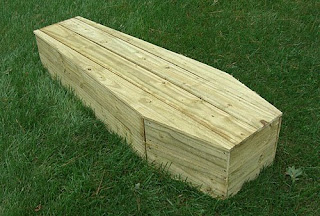
So, here goes a new journey for me and a great opportunity for students and others in the community. Let’s hope this time I don’t need to use my GPS coordinates for the coffin store! Stay tuned for more details, and follow along on this blog in May to read about the adventure.