Showing posts with label CAD. Show all posts

Thursday, March 12, 2009

Back to the Basics of Lift


I have had more than a few interests in my life—often frivolous at first blush. There have been far too many different interests to actively be involved in all of them at once, so I tend to be engaged in something for a while, then box it up and shelve it. If you looked through my shop, you would find boxes containing Beta fish breeding equipment, pottery tools, squash equipment, sheep shearing tools and, of course, pretty much every type of model airplane you can think of.


I pulled one of those many boxes off the shelf this week, and I have been amazed at how it has come to consume my train of thought again. The box was labeled “PRS” for Portable Remote Sensing. To be honest, PRS has never been fully shelved; it has been lingering in my grey matter since Murray and I started the project. With the Bolivia group going to map CERENID next month and an old friend, Dawn, working to create an information database for project sites, the need for good remote sensing data increases. My mind has shifted back to airfoils, amps, thrust, and lift.


I feel like my mind is reloading memory slots at the front of my brain with information I had pushed to the back. I have started sketching and drawing, thinking and evaluating. I stare off into space and recall what I have done, then start inserting new information gathered since the last time I did this. New camera information, new GPS equipment, better servos, smaller gyros and so on. I revisit old locations for inspiration and new ideas. I spent time inside my plane room--standing, thinking, experiencing new thoughts and feelings. I tried, somewhat successfully, to penetrate to the heart of the issue, savor the moment and energize my mind. Time well spent!


That night, only a few hours after new possibilities opened to me there in my plane room, a new drawing file appeared on my computer. It will morph over the next few weeks, and then the dust will start to fly. Years of diverse experience and fresh new ideas will combine to produce one black box. The contents of this box will have roots in the basics of lift, the fundamentals of aerodynamics.
I love to look ahead, but I have learned that you must never forget to look back first. There are physical laws that govern our universe, and there are past experiences that govern our perspective. With the exception of the bumble bee, things don’t fly that don’t conform to applicable physical laws; our new experiences, too, are more likely to ‘fly’ if we reflect on what we, and others, have learned before us.

Wednesday, December 10, 2008

Running With the Herd

I first attended AutoDesk University (AU) in 2001. I remember walking into the registration area at the MGM Grand hotel in Vegas and looking around at all the other people wandering in to register. What I observed was that, for the most part, they were kinda middle-aged, kinda fat and kinda badly dressed, and I thought to myself, “Oh my God, I’m home!” The conference was the most incredible learning experience of my life. There were about 3500 techy people in attendance that year, among them the people who wrote the software I work with everyday and I met (and drank) with them. I listened and asked and absorbed and was generally overwhelmed. I left aware that I knew just shy of nothing—which, for me, was very motivating.


I’ve made the long migration back to the herd every year since, and each year I have come away with something great to put into classes and the rest of my life. This year, some 9000 geeks migrated to AU at the Sands Convention Center to wallow in the collective knowledge of our colleagues. As I have said in past blog entries, I know I tend to stand slightly to one side of normal, and I am okay with that. I am fine with being a zebra in a herd of horses most of the time, but I am just realizing how much I enjoy running with my own herd—even if it is only briefly.

Additionally, I make a point of spending time with some of the same individuals every year. Friendships and working relationships have developed over time. There are some people whom I only see at AU and others with whom I communicate, problem solve, debate, and prophesy all year. This year I even solved a problem presented to me by a true CAD guru—which only proves anew that it is better to be lucky than to be good. I have come to realize that it is not just the friends I have or the learning I do that makes me feel so good at AU. It is that when I am walking the halls, eating lunch, or riding the escalator, I am surrounded by people I intuitively know would understand me IF we had a conversation. It is not that I have to have the conversation; just knowing that I could have the conversation if I wanted to is important.


This year I seemed to have a greater need to run with the herd than usual, and I am happy to say that the herd did not let me down! Perhaps the herd is even a little older, fatter, and more badly dressed now or perhaps I have surrounded myself with some of the truly geeky gurus. Most of you reading this will not understand why I rarely leave the hotel even though it is in the middle of the Las Vegas strip, or why I never even dropped a nickel in a slot machine. Could you possibly understand why, after a great meal, I would rather talk CAD than go to the nightclub? Could you understand that one of the best days of my year ended with me going head to head on a laptop figuring out how to break the software just to prove we had the fix? The herd gets it! Every single member of the herd gets it, and once a year I need to be part of that. I am happy to run with the horses 51 weeks of the year, but please understand that I need to show my stripes for one week at least.

Friday, November 28, 2008

Chapter 12 - All Things Green

Last week, I attended the Green Industry Show and Conference in Edmonton. You might ask yourself, “What is a CAD/survey/GPS instructor was doing at a Hort conference?” particularly after a colleague of mine made a bold statement recently that “’jerk of all trades, master of none’ is NOT a compliment!” (but that is the topic of a whole other blog soon to come!)

Well, to answer your question, I was there to start yet another chapter in my forever-changing life. This conference was for industry owners and managers, not the general public, so it was a nice mix of techy stuff and marketing stuff and personal growth/management stuff.


I was amazed at what the industry, with a very small budget, is doing with research projects. Being from Saskatchewan, I place a high priority on trees, (I always thought the Caragana was a big tree) so I hope that Olds college will join up as a partner on the new prairie tree trials that started this year. (hint, hint)

I was interested in the talk on the marketing challenges facing market garden centers. They have lost a huge slice of the market to the big box stores (interesting, then, that a large part of the whole conference was sponsored by Rona). I was pleased that the speaker did not digress into a pity spiral but chose to focus on the niche his store can fill. He provided an excellent focus on what true service is, and I agreed with his comment that people will pay more if you truly provide them with great service.


For me, the most interesting—or perhaps scary—sessions were on personal management and personal health. These sessions were applicable to anyone but were a big part of this conference because many of the attendees were small business owners. The session on health just reconfirmed that I am fat, I eat badly, I exercise too little and have increased my chances of dying from all the major killers of my age bracket except PMS (you had to be there). The truly enlightening session for me, though, centered on stress and measuring its effect on you. You will be happy to know that when I completed the self diagnostic test, it indicated that I am completely stress-free—mostly because you attended my funeral three years ago! Perhaps I misunderstood a question or two?


At any rate, I learned a lot, and I spent some time in the Olds College booth, meeting people and answering questions. I spent some time with my new colleagues, getting to know them better. And I got a shrub out of the deal; what more could a guy ask for?


P.S. I also fulfilled a lifelong dream to fly an airplane in a hotel room. I am aware that this is not the dream most men want fulfilled in a hotel room, but I am different—and I am OK with that!!

Wednesday, October 15, 2008

Turkey Poisoning

We have just completed the first long weekend of the school year. I can always pick out the first-year students who are having problems with homesickness by the Thanksgiving long weekend. It starts about three weeks before Thanksgiving with unexplained absences on Friday or Monday—or both!


During the first month of classes, there are many activities to keep students busy, and, of course, there is a little studying as well. By the second month, the assignments are stacking up, finals are coming, and homesickness is setting in. Judging by the laundry baskets in the back seat of many of the trucks in the parking lot, students are suffering a shortage of clean clothes as well.


There is nothing worse than being away from home for the first time and being sick. The Friday absences are exacerbated by Thursday night activities. In order to fight off homesickness, students often gather at a local watering hole to compare notes on school projects. (At least I think that is what they are doing?) Waking up on Friday morning, feeling sick, missing Mom or Dad, and facing an 8 o’clock CAD class are ingredients the combine nicely to make a long weekend. This explains the absences before Thanksgiving.


The “real” long weekend gets longer for a different reason: Turkey Poisoning. I am sure that the reason some students don’t come back after the Thanksgiving holiday has nothing to do with them reevaluating if college is where they want to be. I don’t think it has anything to do with them feeling like they are missing out on what their life used to be when they had friends, family and familiar places. I think it is a little-known medical condition I like to call Turkey Poisoning. This condition most often lasts 2-3 days with complete recovery occurring a week after onset. Symptoms include lethargy and a melancholy demeanor. Recovery can be aided with large doses of humor and a pinch of understanding. If left untreated, Turkey Poisoning can be fatal for a college career. So students, if you find yourself afflicted with Turkey Poisoning, get back to school as soon as possible; your instructors are much funnier than your parents. Or try a preventative approach and eat ham instead.

Wednesday, October 8, 2008

So What Is Really There?

One of the best parts of working at Olds College is that you can do some very interesting things if you are so inclined. During a recent survey class, Jack (my very talented Instructional Assistant) suggested that we let the students tackle a drainage problem for a new garden under construction. There was a CAD plan, and some work had been started, but Jack was suspicious that the work and the plan did not match. One quick measurement confirmed his fears; the plan did not fit in the restricted space provided. It seems that the plan was more of a suggestion—like traffic ‘laws’ in Sri Lanka. The discrepancy bothered me, mostly because I did not want to go and take a bunch of measurements. But what alternative was there?

Well, for starters we could get an air photo of the current situation, scale it and print it off for the students to work from, I thought. So I called my mentor, Murray, and we did just that. Now before you think colleges have money for renting airplanes at the whim of an instructor, I need to explain. Murray and I did a research project a few years back on portable remote sensing. The outcome of the project was a remote controlled aerial platform for taking pictures. It has proven very handy to answer questions such as "What is really there?" On this occasion it provided an added bonus.

A new garden feature under construction


It turned out that the fall colors where spectacular! I am not an artsy guy by nature, and those who know me know I have no talent at all, but even someone as artistically obtuse as I am was impressed at Mother Nature’s amazing canvas. It took about 20 minutes to get the pictures and an hour to decide which ones I wanted to keep. Another 30 minutes were required to get the data into the computer, scaled into a template, and ready to print. Another 15 minutes to repeat the whole process when my computer shut down and I realized I had not once saved…When will I ever learn?


Off to class I went, armed with the photos, laser levels, chains (tape measures), pins and other implements of destruction (sorry, flashing back to Alice’s Restaurant), and the students dug in. Now, I confess I see the world through slightly different glasses than most, but it warms the cockles of my heart to see Turf students measuring with chains and a plumb bob without any prodding from me. I was in such a good mood when I got back to my office that I thought I would share some of the pictures with everyone. I picked a few, saved them on our network, and sent an email to all students and employees of Olds College encouraging them to have a look at the beautiful shots.

The north orchard in fall splender


Now, I should know better than to send out a college-wide email, but I never learn. While I was getting emails to the effect of "great pictures," our IT department was getting emails to the effect of "why can’t I see those pictures?" It turns out that there is not a single network location that is accessible to everyone at Olds College. This made me think: isn’t it interesting that at a learning institution there is no single location within our network for collaboration between students, staff and faculty? Yes, the network provides space for virtual get-togethers between any two of the three groups, but not all. It is not that there couldn’t be space, there just wasn’t…yet.

Olds College from the North West


So where do we collaborate? Students collaborate on facebook, Second Life, the residence lounge, and in the back of my class. Faculty collaborates in the staff room, at lunch, or in the hall between offices. We collaborate at conferences, or after meetings—sometimes even during a meeting—but true collaboration, global collaboration, does require a whole new set of tools. I don’t have them yet, but I am willing to try. This blog is a start. My web guru emailed and said "Why didn’t you just put them on Flickr?" I don’t have a good answer for that, but next time I will give it a shot. Every time I think I am being wildly creative, I discover that, in fact, I am only being mildly creative. There is always more to learn, and there is always a better faster way to do it. The day I think I have it all figured out will be the day I know dementia has set in.

Looking South West across Olds


This is the closest I get to artsy shots. Enjoy the beauty that only Mother Nature can serve up. And watch for a Picasa photo album coming your way.

Friday, October 3, 2008

Music Lessons in CAD

I have been very nice so far on this blog, and those that know me will wonder what valium derivative I take before writing. Perhaps it is time for some of my niceness to disappear…


Class dynamics have always intrigued me, and over the years, I have honed the skill of identifying early what might go wrong and who might influence it. I am frustrated when I get a group of students who collectively don’t want to take advantage of the opportunities to learn that are given to them here at Olds College. Instructors can try to encourage learning but will have, at best, only moderate success unless students engage the topic, actively think, and attempt to apply the content to real life. I have found one type of student with whom I always have to work hardest to redirect their thinking: “the Producer.”

The Producer is that student who comes to class and just wants to know the steps to get the assignments done. These students would do well working on an assembly line but not working as a land agent or any other career that involves lots of problem solving. The Producer is not bothersome in class but needs very detailed instructions and cannot handle unscripted events. The Producer somehow believes that if they get all the assignments done in the course they deserve to pass regardless of how long it takes them or how much help they needed to complete the task. These are the students whose eyes glaze over when I rant about assignments as learning activities, not production activities.


I give my music lesson example: When you took music lessons, who wanted to hear you practice your scales? Maybe your mother? Practicing your scales is important if you want to sound good at the recital. I tell students to think of assignments as their scales and exam as their recital. No one would ever dream for playing a piece of music once and then performing it for an adjudicator. The drawings I assign are learning activities. I don’t care what you produce during the practice part of this course; I care what you learn, and I know what you learned when I mark your exam!

The Producer would never consider doing a drawing assignment over.
“So how did you do on the assignment?” I ask.
“I got it done, but it took forever!” she replied.
“Really, why don’t you draw it again?” I suggest.
“What for, I got it done?” she answers indignantly.
“But did you learn anything? If it took you an hour and a half to draw it the first time, it should take you 20 minutes the second time, seven minutes the third. And I can do it in three minutes if I keep my mouth shut while I draw it!” I rant.

Learning CAD has a large tactile component and tactile learning requires repetition. Repeating the same drawing reinforces the tactile learning faster than doing three different drawings utilizing the same tools, but does not promote problem-solving skills. There is a balance that has to be attained between promoting problem solving skills and reinforcing tactile learning.

So remember students, you are here to learn, not to produce. You will get plenty of opportunity to produce when you are on the job. When you do produce something at college, it is to assist the learning process. When you say “I hate homework,” you are really saying “I hate learning.” No project or assignment should ever be given that does not directly support the learning objectives of that course.

I know that if I can break the “just do the work” mentality I have the opportunity to redirect a student so they can get more from the college experience. I encourage students to race each other the second time they do a drawing or add a funny object the second time around. I reinforce that if they make a mistake in practice, that’s OK as long as they know why and can fix it. All problems can be fixed in CAD! Well all drawing problems at least…

Monday, September 29, 2008

It is Not All Laughing Children and Happy Endings

A Better World, a local Red Deer humanitarian group I work with, is supporting rural Bolivia in a number of ways. One of the things they provide is a health fund administered by Marg and Jake Hoogland who live and work deep in the jungle--literally at the end of the road. There are very limited medical facilities within 3 or 4 hours' drive of the farms in their area. Many of the homesteaders have never been to Santa Cruz (the nearest big city), and they would not have the funds or contacts necessary to obtain medical help even if they were able to get there. The rural health fund and Marg and Jake work together to fill these gaps.

Earlier this year, Marg contacted me about a little boy in their community who was not responding to treatments and slowly going down hill. Ten-year-old Jhonny was smart and a real leader in his family and at school. He was all boy: climbing trees, running fast, and coercing his sibling into trying to keep up. Jhonny was such a fixture in the community that when he did not show up at a local function, Marg became concerned. She found him at home, bedridden, dehydrated, and suffering with bad headaches. The family had taken him to the small local clinic again very recently, and there he was given milk of magnesia.

Jhonny's House

Marg suggested that Jhonny be the first case for the ABW rural health fund. I agreed, and the Hooglands dropped what they were doing and took Jhonny and his mother to the children’s hospital in Santa Cruz. It was to be a six week stay for Jhonny, his mother (8 months pregnant), and Marg. You see, Jhonny had a large brain tumor. Doctors determined that it was operable if there was money to cover the bills. If surgery was not performed soon, there was no question that this tumor would be fatal--probably soon. Marg and I discussed the impact of draining the entire health fund for one little boy instead of helping 20 or 25 people in the community. That these kinds of judgment calls have to be made in a country like Bolivia is the tragic reality. My cousin’s youngest son had an operable brain tumor, but at no point did anyone say, “Should we spend the money or just let him die?”

Marg and Jhonny in the Childrens' Hospital

This was a no brainer for me! Spend the money and give the kid a chance! Jhonny ended up having 6 surgeries in 6 weeks and contracted chickenpox to boot! The total hospital bill was around $5,000. I flew to Bolivia in August to start arrangements to take a group of Olds College students in May 09. On my first day in Bolivia Marg and Jake took me to see Jhonny in the hospital. They were hiring someone to be with Jhonny at night as Marg and Jake were coming with me to help plan the Olds College trip. Jhonny had his bandages off for the first time and was looking thin, but responsive. He was squeezing a tube of toothpaste, and his eyes would flutter open. He responded to touch on his feet, and the doctors were very hopeful about his condition.

Jhonny's mom Erselia and Marg

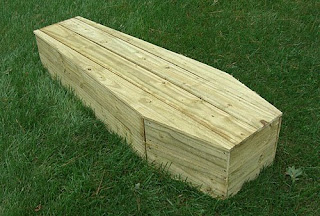
We left the hospital to get some food and talk about the busy week to come. Marg received a call to return to the hospital. Turns out the Jhonnys heart stopped, and he died. Six operations and chicken pock were just too much for his little body. Death in a tropical country leads to its own set of problems. We returned to the hospital to have the body released. This meant paying the bill in full, and getting the forms to transport Jhonnys body. A coffin would be about 600 B ($95.00 Can) and Jhonnys mother said she just couldn’t afford that, so we would just wrap him in a blanket and put him in the back of the truck…. Not if I can help it, I thought. It turns out there are all night coffin stores near the hospital, so off Jake and I went.After a long terrifying drive in the middle of the night, we lay Jhonny in his coffin on the alter of the local church for a day of service before the burial. Jake and I went to his house to get a little sleep before to burial. 51 hours had past since I had seen a bed, and that one had been in Canada. 51 hours that remolded who I am, and clarified why I try. Jhonnys mother was very upset that we spent all this money, and Jhonny died anyway. She felt badly and was concerned that we wasted all that money. She was devastated by Jhonnys passing, but was worried we would think we wasted the money. Wasted the money??? That somehow she had let the donors down, because Jhonny died???

Carrying Jhonny to the graveyard

I have replayed this over and over in my mind since returning to Canada. This was an operable, benign tumor in the head of a 10 year old boy. How could we not give this boy a chance? If this was your son, would you say, “sorry, too much money” and let him die? No, of course not. This family did not have the money (about 2 years wages for them) and I am not a big believer in throwing cash at problems, but this is the perfect example of where money is all that was needed to give Jhonny a chance because we had Marg and Jake on the ground willing to help.We do not win them all, but that should not deter us from trying. You cannot win if you don’t try. I know we like to read stories about happily ever after, but there is much to be learned from the journey as well. We tried, and I would try again given the same circumstance. The rural Bolivia fund is now empty, and I would like to double it for next year. Please consider supporting this activity, we are very lucky to have Marg and Jake on the ground to administer this fund. I don’t think you could get better bang for your buck anywhere else.I bring Jhonny to class with me every day now. He lives on in my mind, reminding me of how lucky I am to be raising my family in Canada. And he reminds me that even in Canada we have a long way to go. Fifty years from now we will look back at how primitive Canada was, much like I look at how primitive parts of Bolivia are today. The changes will happen because of Education. The student I help shape today will be the innovators and change agents of tomorrow. My students will make a difference in this world, and I am happy to be a small part of that. I hope that Jhonny will be part of the last generation that sees such a large gap between peoples of this earth. For more information on Jhonny or the Hooglands see http://www.hooglandsinbolivia.blogspot.com/
To donate, follow the link below, and please specify Rural Bolivia,Thanks! http://www.a-better-world.ca/

Wednesday, September 17, 2008

How to Create the Common Cold


If you want to study the common cold, you have to be able to produce it. Here is a sure-fire recipe:
First, collect seemingly empty incubation units, preferably from all over the country. Bring those incubation units together and pack them into confined boxes. For best results, continually mix incubation units between boxes. Often this in itself is enough to produce excellent results in about two weeks. To speed the process or to create new strains, however, try these helpful hints:
  • ensure that incubation units run for a minimum of 18 hours each day.
  • combine all incubation units into one large box and agitate.
  • add loud music, causing the units to vibrate and collide with each other. If you want spectacular results, also add a little alcohol to the mix.
Wait 7-10 days, and voila! Your incubation units will produce copious quantities of the common cold for you.
***************************************************************************************
We are starting the third week of classes, and the sickness level rises exponentially at this point in the year. I, too, have fallen victim this year--something I often avoid. Olds College has it better than some institutions, partly because we don’t have classes of 500 and partly because students often are with the same group of people all day. After many years behind the teachers desk, I have become reasonably good at differentiating between stomach flu and the 24 oz flu (sorry, I mean the 500ml flu), between eyes red from allergies and those red from sleep deprivation.

College is more than learning how to learn. For many of our students, this is their first time away from home. Some of our students become of age during their first year here. So while I am trying to get them to be thrilled and excited about CAD or GPS or soils and such, I know I am in competition with topics like dating, exploring entertainment opportunities, or, as I viewed on YouTube, Olds College hallway tray surfing! I make it my personal goal to be more entertaining than hallway tray surfing, but I know I will never be able to compete with dating.

I walk the thin line of ensuring that students realize the connection between action and consequence while still providing a positive learning environment. I will get nowhere if I take a dictatorial approach, but I am not doing them any favors if I do not set high expectations for them to meet. Instead of saying, “Don’t come to my class hung over!” I prefer, “You don’t look so good; you feeling ok? There is no puking on my keyboards you know! Puking on my keyboards is bad for your mark. How is that balance between personal life and professional life going for you?”

I need to create a learning environment in the face of colds, distraction, hallway tray surfing (http://www.youtube.com/watch?v=ythe2cCtiMc ) and life. So far I think I am doing OK.

Wednesday, September 3, 2008

The First Day of School!

I have had 32 "first day of school" events in my life, 20 as a student, and 12 at the front of the class. Last night was no different than any of the other 31: nervous, butterflies, and a little "what am doing!" mixed together. You might think this goes away with time, but not in my case. I confessed my feeling to a colleague a few years back. He has been teaching since the days of slate and I have the utmost of repect for him. He said to me "The day you aren't a little nervous, is the day to quit," so I don't feel so bad now.

I was in at 7:30 to get everything fired up in the brand new lab I am teaching in. Lots of great new tech stuff with unbelievable potential, if only we can find the time to learn to use it! Today the goal is just to get through the class without any smoke, fires, or complete computer failures.

The new students slowly file in; for many of them, this is the first time they have been in a college class, and I have to remind myself that they are more nervous than I am. I know from exerience that once I "hit the stage" I will be fine, but that 10 minutes before class is the worst time for me. 8 o'clock--curtain goes up, lights go down, and it is show time folks! The first ten minutes are a blur. Read the audience: who is bored? who is confused? who will be the group leaders? and most importantly, who will laugh at my bad jokes? My goals are simple: keep them awake, get everyone to engage at least once, and make sure that everyone smiles! This is a great group of students--eager, attentive and mostly interested.

My job is 3 part salesman and 1 part entertainer. I believe that I cannot teach anyone anything, but I can convince them that they will want to learn it. The sales job is getting easier every year. When I started this, half my students had never turned on a computer; this year I did not have one student who did not like computers.

Every year at Olds College I see about 300 new students personally, and this year will be no exception. The thing is that in 2 years, these students will graduate while I will continue to have a "first day of school" experience annually until they haul me out from behind my computer on a stretcher, or I don't feel nervous on the first day.